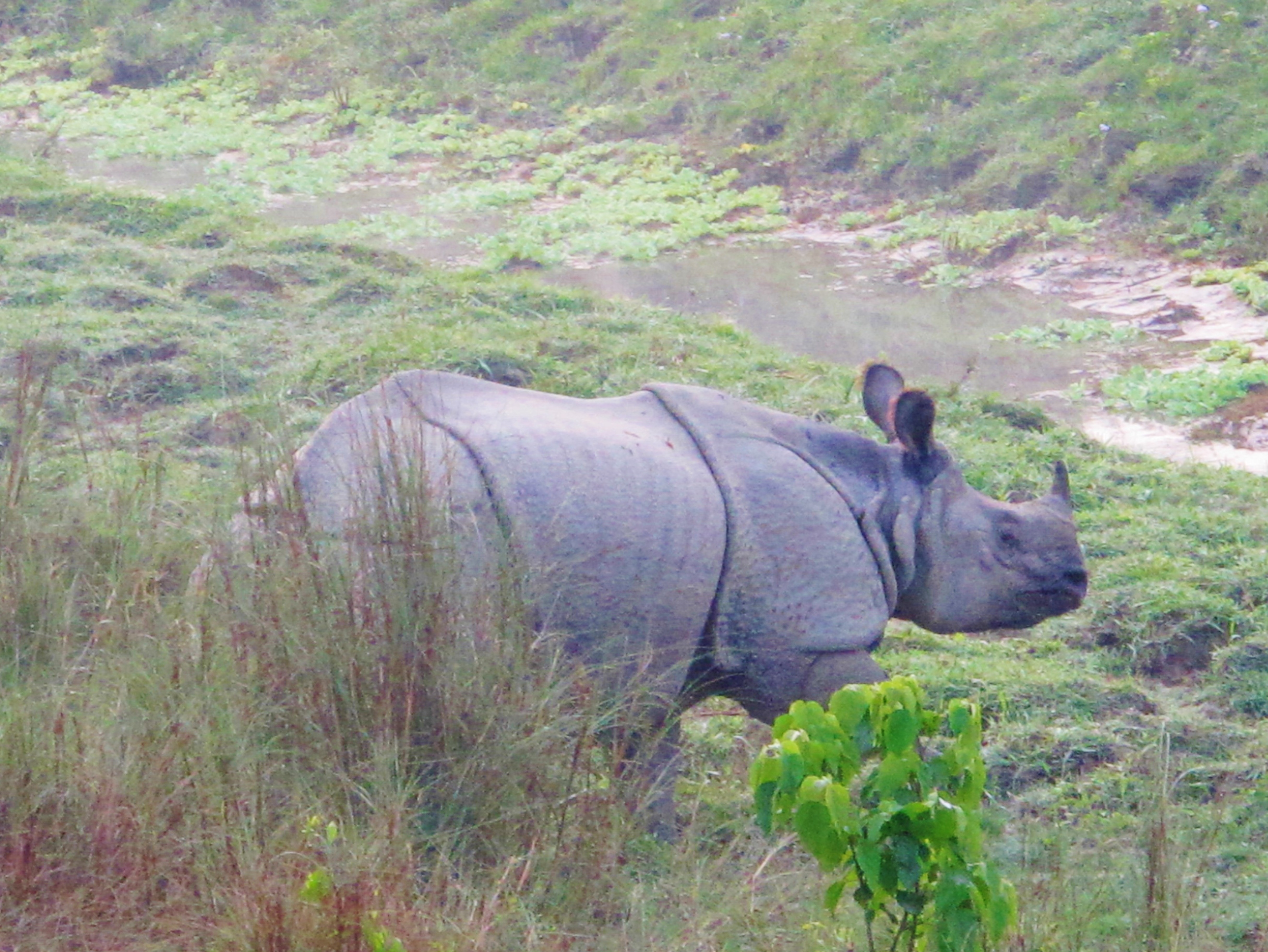
Indian Rhinoceros – this individual, an adult male, emerged from the national park every evening to bathe in the river at the edge of Sauraha village.
I decided to start gently in Nepal with a few days in Chitwan National Park. This huge area, Nepal’s oldest national park, is in the south of Nepal bordering India, about 5 hours by bus from Kathmandu. It is a stronghold for the rare Indian Rhinoceros, as well as Tiger – both of which are regularly seen here.
I was lucky as, during my visit, an adult male Rhinoceros was in the habit of bathing in the river next to Sauraha village in the late afternoon. I was told he went into the village at night to eat crops and generally make a nuisance of himself. In any case, I saw him every afternoon, and didn’t seem too bothered by the large numbers of people taking his photo.
I decided to stay outside the park proper during my stay, and visit the “buffer zones” only. The reasoning behind this was mainly financial – it was quite expensive to go into the park as, in addition to the $15 per day entry fee, it would have been compulsory for me to hire not one but TWO guides (for my own safety – sloth bears and rhinos can be dangerous, and there are plenty of tigers). Also, the best birding areas are quite deep inside the park, meaning renting a jeep is the best option for birders – but this was well out of my price range.
So I focused on the areas around Sauraha village, alongside the river, and a nearby forested buffer zone called “20,000 Lakes”, which was about a 30-minute cycle ride from my accommodation (bicycle rental is cheap and readily available in Sauraha). All in all, I saw 107 bird species in one evening and two full days – a nice start to my birding in Nepal.
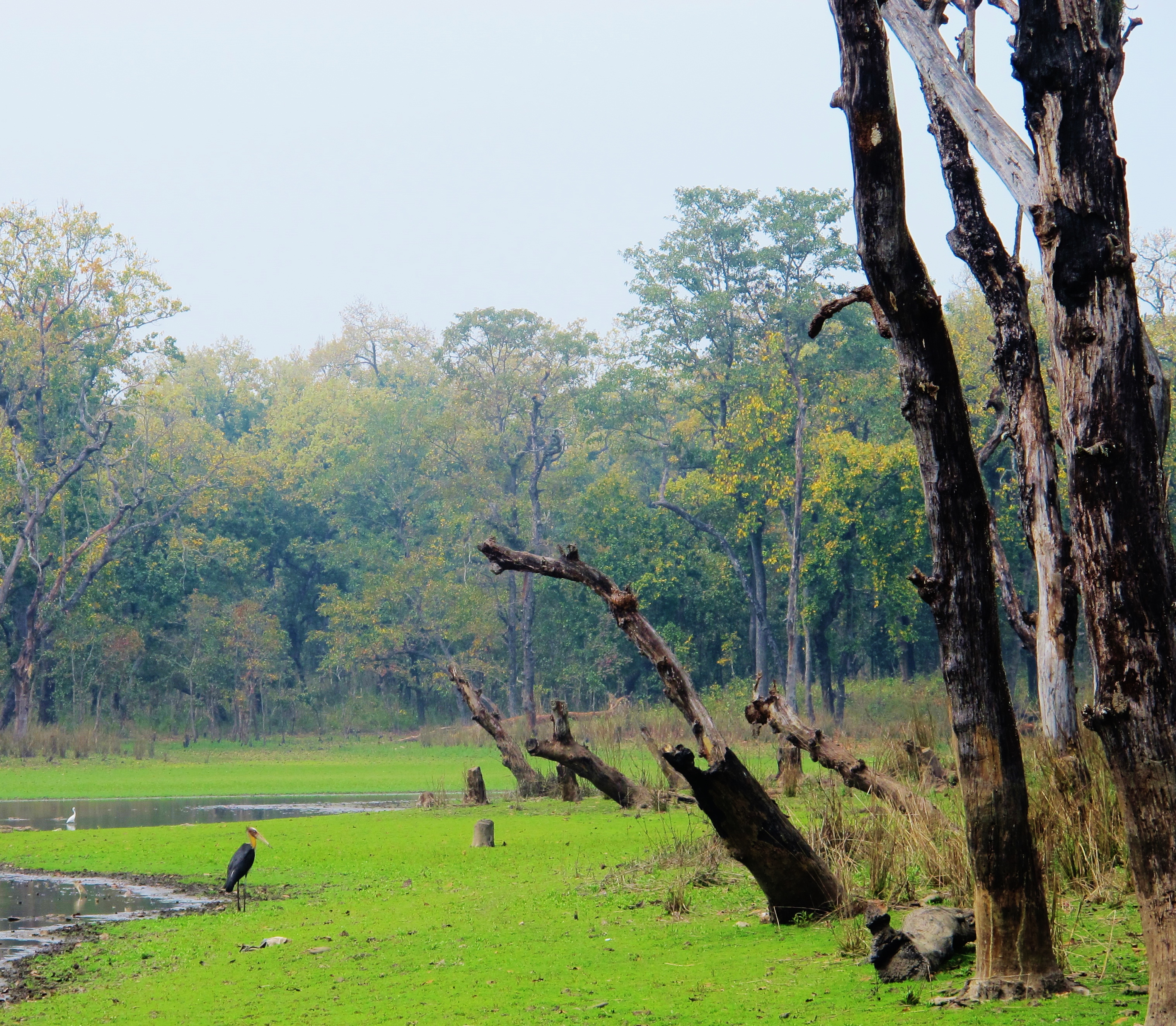
Distant Lesser Adjutant at one of the “20,000 Lakes” – this pond also had Red-naped Ibis and Black Stork.
I had the good fortune to make several birding acquaintances during my stay. The first was “Basu”, president of the local bird society and a specialist bird tour guide. Although I didn’t hire him, he kindly took me on an afternoon walk to a restricted area to see roosting owls – we saw a pair of Brown Hawk Owls and Jungle Owlet. Basu is extremely knowledgeable about the local birds (he has seen more than 95% of the 627 bird species recorded at Chitwan), and very easy company – I would recommend him for anyone looking to hire a guide.
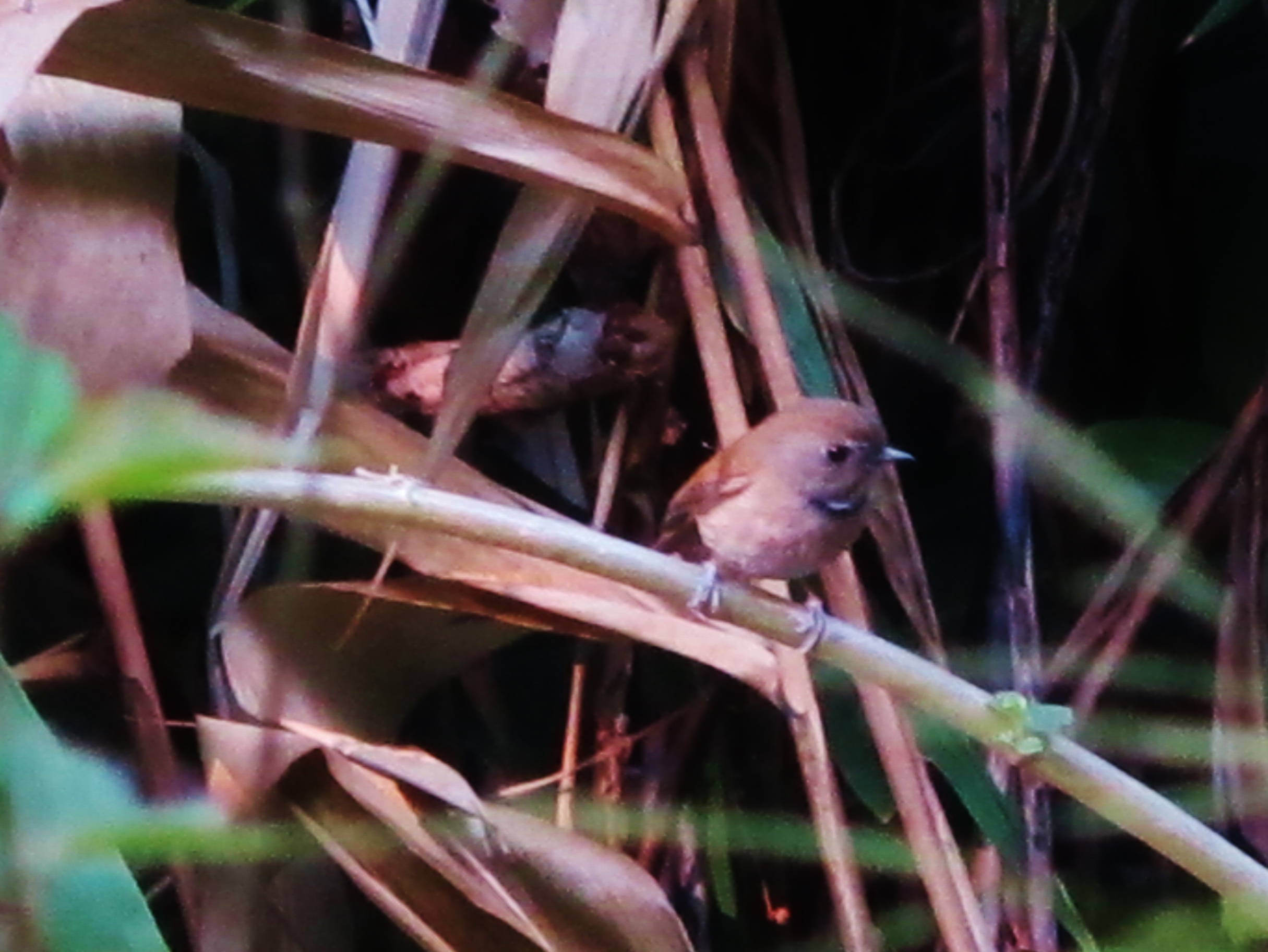
The second encounter was slightly more surreal. Birding at the 20,000 Lakes one morning, a car pulled up and out stepped Carol Inskipp, accompanied by three Nepalese birders. Carol is something of a legend among birders in South Asia, having authored most leading bird field guides to the area, and had some very useful advice for me about birding in Nepal. My morning got even better when I bumped into them again a few hours later, when they had just found a very showy Nepal Wren-Babbler – the first record for Chitwan of this Nepalese near-endemic bird. A most unexpected lifer for me at Chitwan, and seen in such illustrious company as well.
Jungle Owlet and Rufous Treepie – these two were certainly not the best of friends!
Lifers: Yellow-footed Green Pigeon, Jungle Myna, White-browed Wagtail, Ashy-headed Green Pigeon, Indian Pond Heron, Brown Crake, Red-naped Ibis, Indian Peafowl, Smoky Warbler, Rosy Pipit, Jungle Babbler, Common Hawk-Cuckoo, Plum-headed Parakeet, Chestnut-bellied Nuthatch, Nepal Wren-Babbler, Jungle Owlet, Fulvous-breasted Woodpecker, Himalayan Flameback (total 1,836).
2015 Year Ticks: Woolly-necked Stork, Common Merganser, Lesser Adjutant, Rose-ringed Parakeet, Eurasian Collared Dove, Citrine Wagtail, River Lapwing, Orange-breasted Green Pigeon, Stork-billed Kingfisher, Booted Eagle, Lesser Yellownape, Grey-headed Fish Eagle, Black Stork, Common Woodshrike, Brown Hawk Owl, Silver-backed Needletail (total 512).
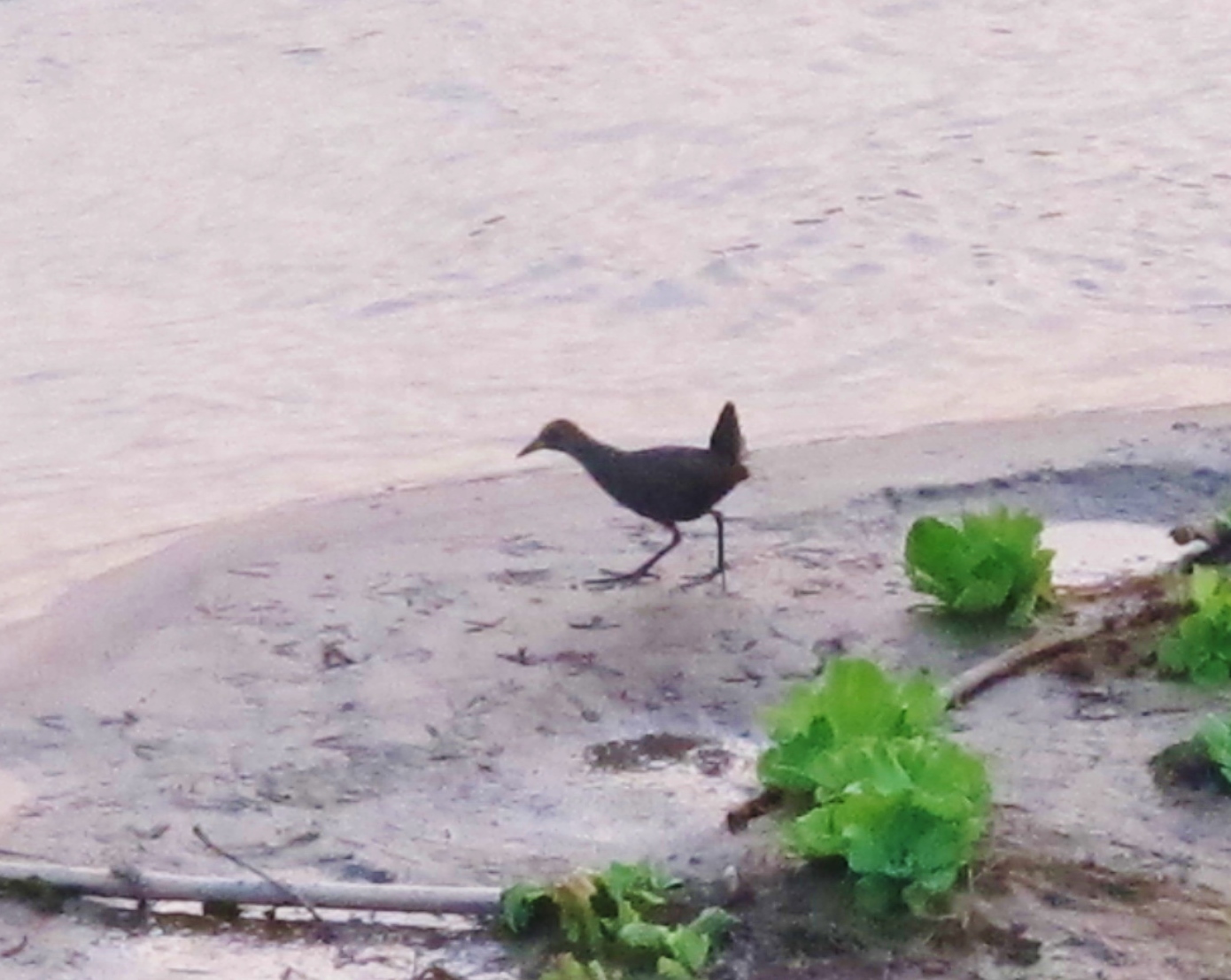
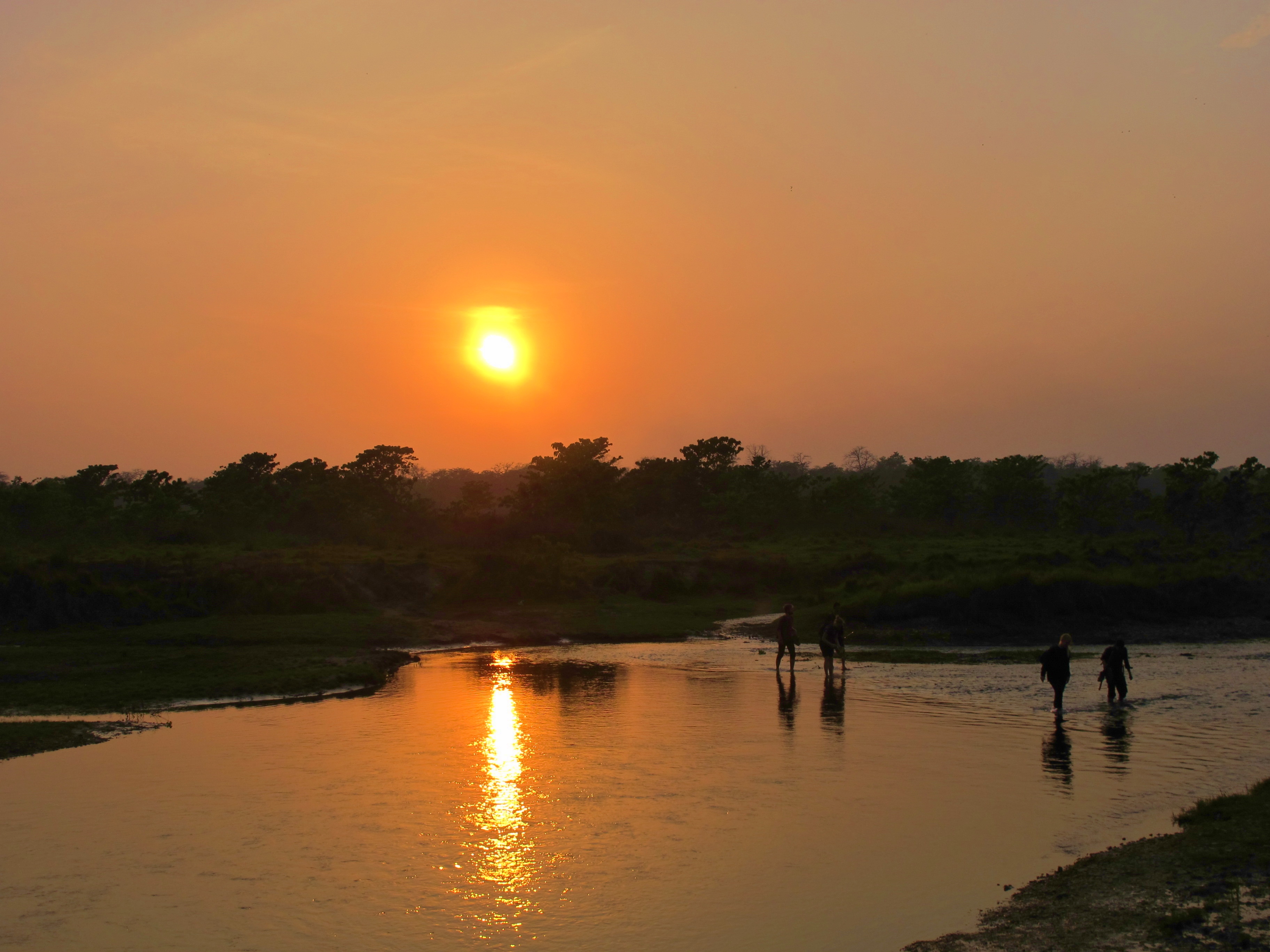
Brown Crake out in the open … this speciality of the area was surprisingly easy to see – for a crake.Trekkers returning from the national park at sunset.
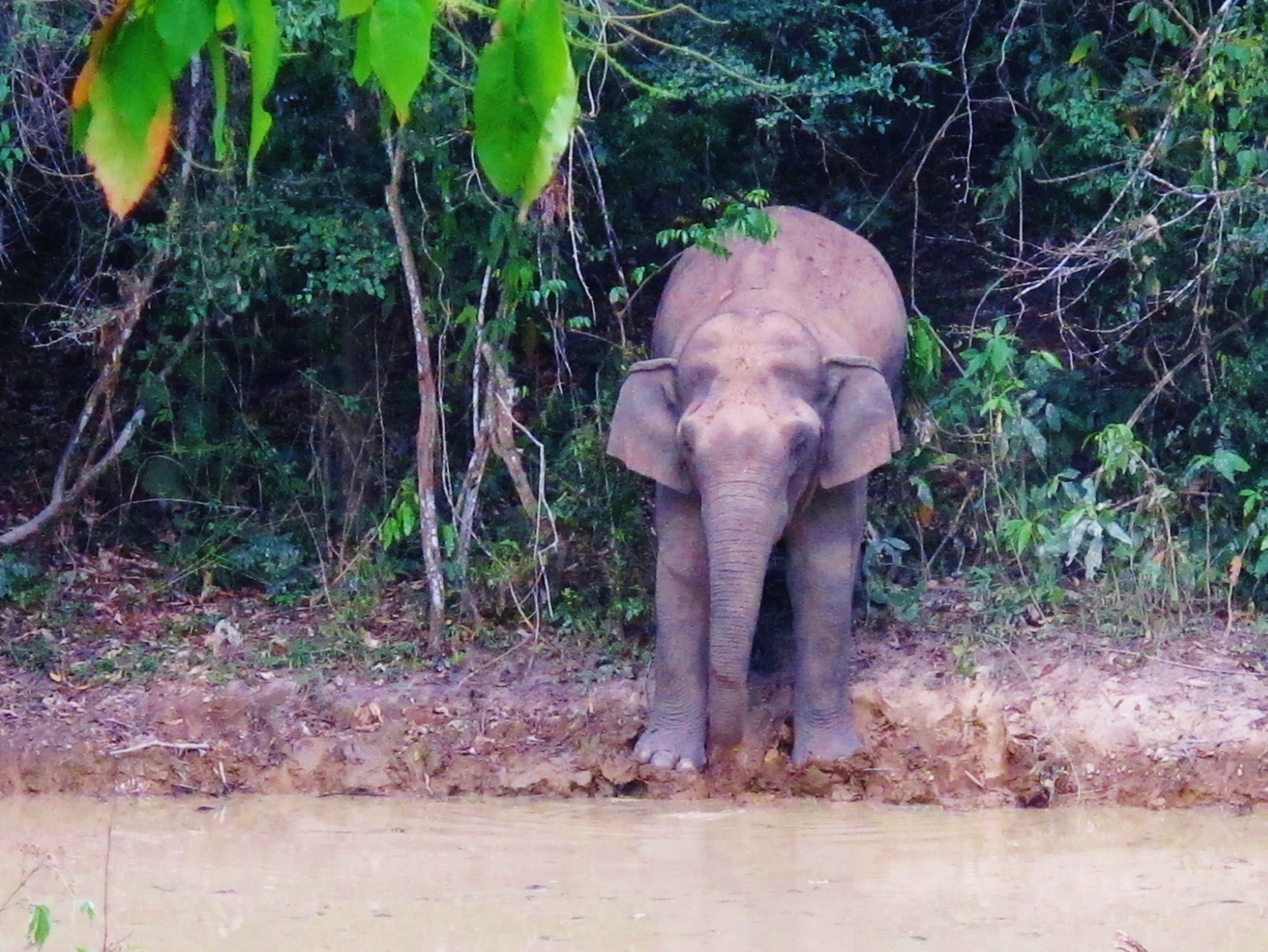
It’s not strictly speaking a bird, but even the most single-minded of birders feels a sense of awe at the sight of a wild Asian Elephant. Kaeng Krachan is one of the best places in Thailand to encounter one, although even here sightings are far from guaranteed.
Last Wednesday morning, I was comfortably settled into my seat in a plane at Bangkok airport, all ready to take off to Kathmandu, when my flight was suddenly cancelled due to a minor crash on the runway there (thankfully no one was seriously hurt). As it was unclear exactly when flights to Nepal would resume, I decided to cut my losses and rebook for next week, giving me the perfect window of opportunity to head to Thailand’s premier forest reserve, Kaeng Krachan National Park.
Covering nearly 3,000 square kilometers and directly adjoining large forested areas across the border in Myanmar, Kaeng Krachan is a very wild place that still harbours many of South-East Asia’s rarest mammals. Thailand’s forests often seem fairly sanitised these days, but Kaeng Krachan is the exception. It still feels dangerous …. the forests are bursting at the seams with poisonous snakes, and weird and wonderful insects, not to mention leopards, bears, a few tigers, and the most dangerous animal of them all – Asian Elephant – which lives in good numbers in the park. Elephants do occasionally kill people here, including a girl just last year, and for this reason wandering along the roads and trails at night is not allowed.
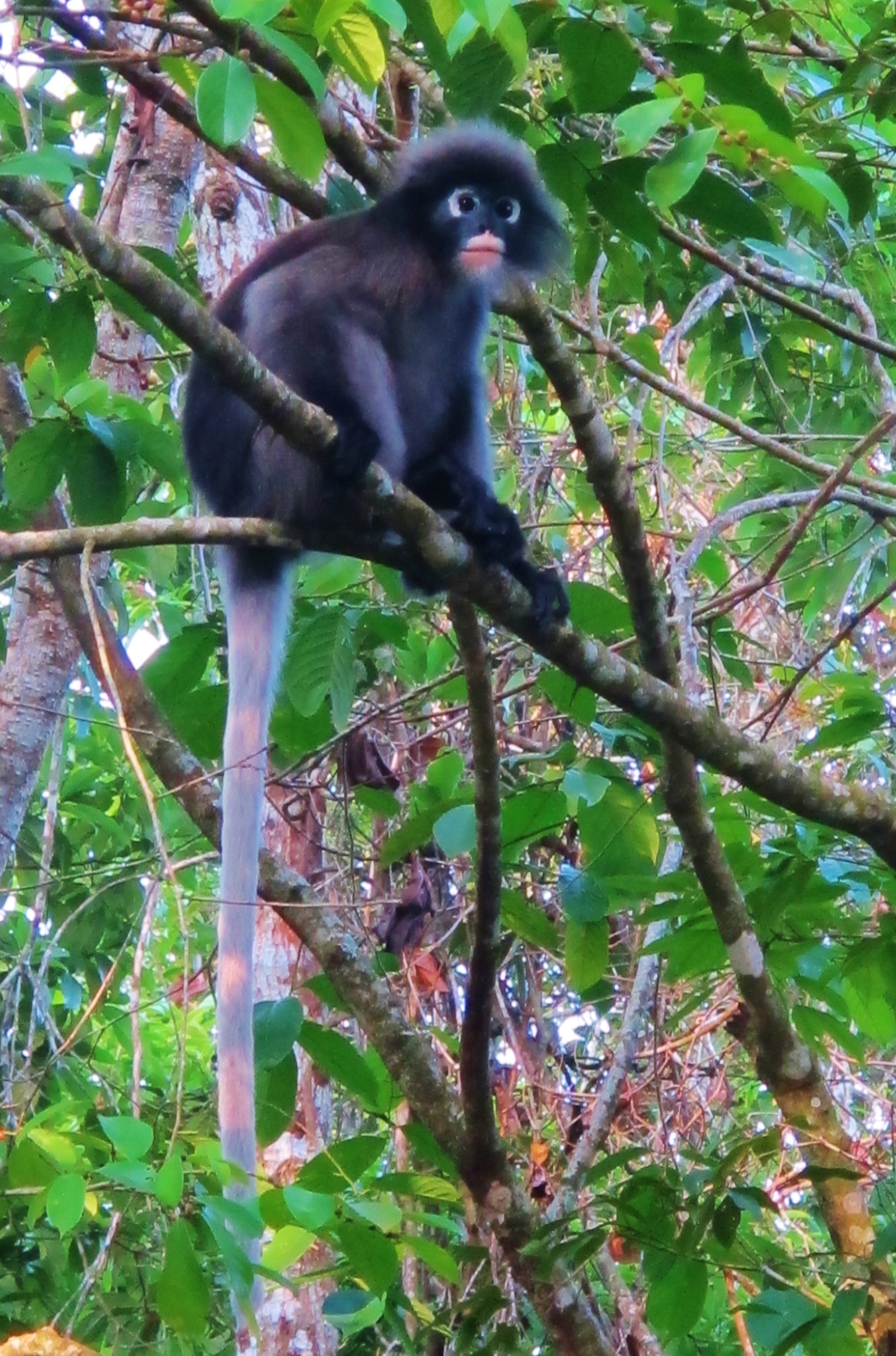
During my stay, an elephant visited the Ban Krang camping ground nightly, where it would wander past the tents and break the water pipe outside the toilet block so it could drink. Every morning the rangers had to replace the pipe. Behind the campsite restaurant, a giant Porcupine could almost always be seen after dark feasting on dinner scraps, sometimes alongside civets and even a jackal. Some other birders videoed a Leopard on the road at about Km 22, just an hour or so after I had driven along there. Not long ago, another visitor photographed a Tiger on the road not far from Ban Krang – and camera traps and the report of an occasional spine-tingling roar attest to its continued presence in the area. Dusky Langurs are abundant and easy to see, and I saw a pair of Stump-tailed Macaques at a waterhole, but I had to be content with only hearing the loud whooping cries of White-handed Gibbon each morning.
Needless to say, the whole area is incredibly rich in bird life, but as in most tropical broadleaved forests, birding can at times be a very frustrating experience, with some walks on the roads and trails producing almost nothing.
I put in three days of dawn to dusk effort in the park, regularly covering many different altitudes, locations and forest types, and finished with a respectable total of 114 bird species seen within the park gates. In addition to this figure, a number of species were “heard only” so not included in this total or my year list. Notable birds in the latter category included five owl species (including the rare White-fronted Scops Owl) and Banded Kingfisher.
I took a big bus from Bangkok’s Sai Tai Mai (southern bus terminal) to Hua Hin. A ticket costs about 160 baht and the journey takes a little under three hours. There are also minibuses from Victory Monument in central Bangkok, which are more convenient for public transport connections and hotels in the city. However in my experience these vehicles are inevitably driven very recklessly, and the seats inside are very cramped – in my opinion they are best avoided.
Hua Hin is a good base as it is a tourist town with hundreds of hotels, and a good range of international and local car hire companies. It is best to book a car in advance, as they seem in demand at this location and some rental outlets didn’t have any available. I eventually found a Mazda2 that seemed to have quite good ground clearance for a small car (essential at Kaeng Krachan). The cost was 1,200 baht per day – you could probably shave a few hundred baht off the price by pre-booking.
Driving to Kaeng Krachan is by no means straightforward, as inland from the coast there is a maze of small roads, which although numbered often don’t have signs in English. Make sure you have the route thoroughly worked out before leaving Hua Hin. It’s about 70-80km from Hua Hin to the park headquarters, then another 20km from there to the park gates.
Fluctuating entrance fees are all part of the charm of visiting Thai national parks, and on arrival I noted that Kaeng Krachan has recently increased its entrance fee from 200 baht to 300 baht, plus 30 baht for the car. I stayed within the park for the entire time, so did not need to buy another ticket, but for people overnighting outside the park this fee is payable every day.
Camping at Ban Krang costs 30 baht per night for those with their own camping gear. Tents and bedding are available to rent for 200 baht per night all-in – including assembly by a ranger.
Small restaurants at Ban Krang and Panoenthung campsites serve basic Thai meals, but for birding on-the-go, it’s wise to bring plenty snacks and drinking water. Alcohol is officially prohibited, but I saw the rangers enjoying a beer one night so it seems laxly enforced here.
There are mixed reports about whether it is possible to take an ordinary car (not 4WD) up to Panoenthung. Emboldened by the tales of friends who took their Toyota Vios to the top just a couple of weeks ago, I went up there daily in my Mazda2 and found it not too bad at all. The track is extremely rough and rocky, and very steep in places, but ground clearance wasn’t a problem. Getting traction on the loose stones and gravel was a little tricky at times, but at least the road was dry …. in the wet, it might be impossible to drive up some of the steeper sections in an ordinary car.
The lower sections of the road, below Ban Krang campsite, have recently been smoothly asphalted – it can only be a matter of time before an elephant is hit by a car driving too fast along here.
As a general observation, there has been a huge increase in visitor numbers and facilities since my first visit here in 2006. This is bound to have a detrimental effect on the wildlife in the long run, pushing shyer species deeper into the forest.
An enormous Black Giant Squirrel. This one was along the track between streams 2 and 3.
Birding areas and highlights:
Measured in kilometers from the park gates. Ban Krang campsite is at Km 15 and Panoenthung is at Km 30.
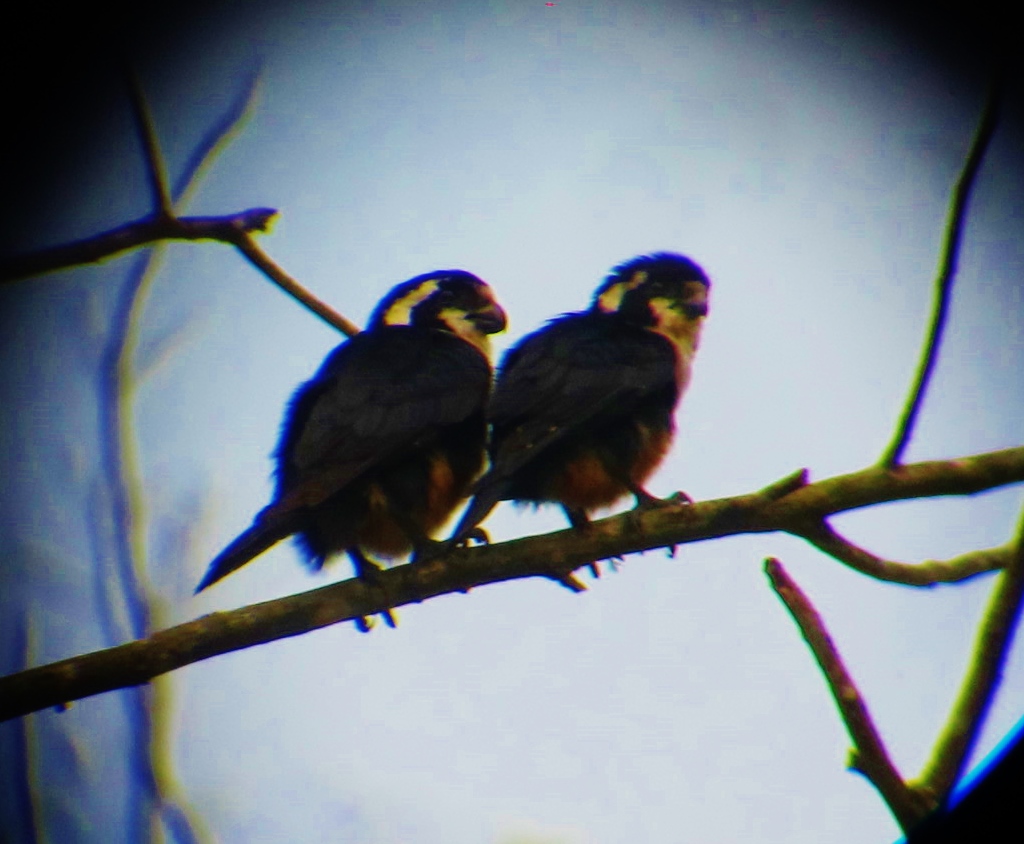
Km 9-10: an open area with scattered trees had breeding Black-thighed Falconets. A few hundred meters further on, a concrete bridge next to three small waterholes is a good place to wait and see what turns up. I saw an Asian Elephant here three times in one afternoon. Birding highlights were a pair of Great Slaty Woodpeckers on two days, on the second occasion very close to the road, a pair of Grey-headed Woodpeckers, Golden-crested Myna, Thick-billed Pigeon, Thick-billed Warbler (not on Nick Upton’s checklist for Kaeng Krachan), and Red Junglefowl coming to drink at the waterhole.
Km 10-15: the smooth road has almost no traffic, ideal for driving slowly along and stopping when a bird is seen or heard. Many Oriental Pied Hornbills and a pair of Hill Myna were my best birds here.
Km 15 (Ban Krang campsite): Personal highlight was a Heart-spotted Woodpecker beside the track about 200 meters past the campsite. Large-tailed Nightjar could be seen in the evening and common birds around the campsite fringes including Blue-eared Barbets at their nest hole.
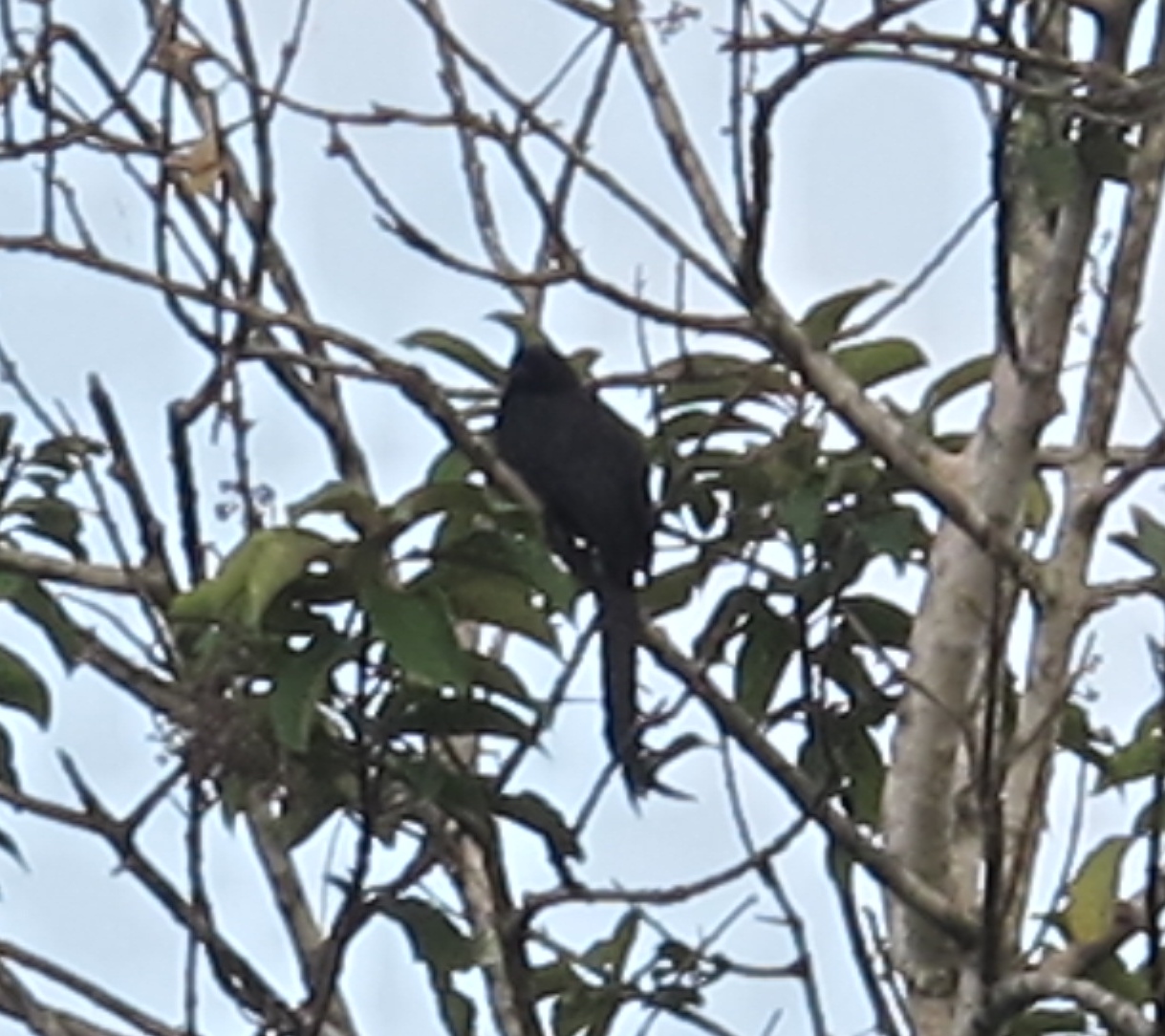
Streams 1-3: a few kilometers past Ban Krang campsite, and at the weekend there were birders and photographers always along here. Potentially a huge number of species inhabit the wonderful primary forest in this area. I missed most of the key birds, but did see some good personal records including Laced Woodpecker, White-browed Piculet, Drongo Cuckoo, Little Cuckoo-Dove, Crow-billed Drongo, Great Hornbill and Silver-breasted Broadbill.
Km 22-23: halfway up to Panoenthung, the track levels out and follows a ridge. This is where Leopard has often been seen. Birdwise it was very good, with Kalij Pheasant, Raffles Malkoha and Dollarbird all showing for me here.
Km 27-28: a well-known area for Ratchet-tailed Treepie. I didn’t see one here, and also failed to find Rufous-browed Flycatcher in this area, but I did see nesting Long-tailed Broadbill, also Silver-breasted Broadbill, Collared Babbler, and Black-throated Laughingthrush.
Km 28-30: walking the trail all the way to Panoenthung produced Spot-necked Babbler and Red-headed Trogon.
Km 30: Panoenthung campsite produced views of lots of common birds, but the highlight was a pair of Ratchet-tailed Treepie perched in a tree early morning along the track to Panoenthung royal lodge.
Km 31-32: another good area and much less visited than the lower sections of road. Highlights here were Wreathed Hornbill, Sultan Tit, Rufous Woodpecker and Common Green Magpie.
Ratchet-tailed Treepie at Paneonthung – a very poor record shot!
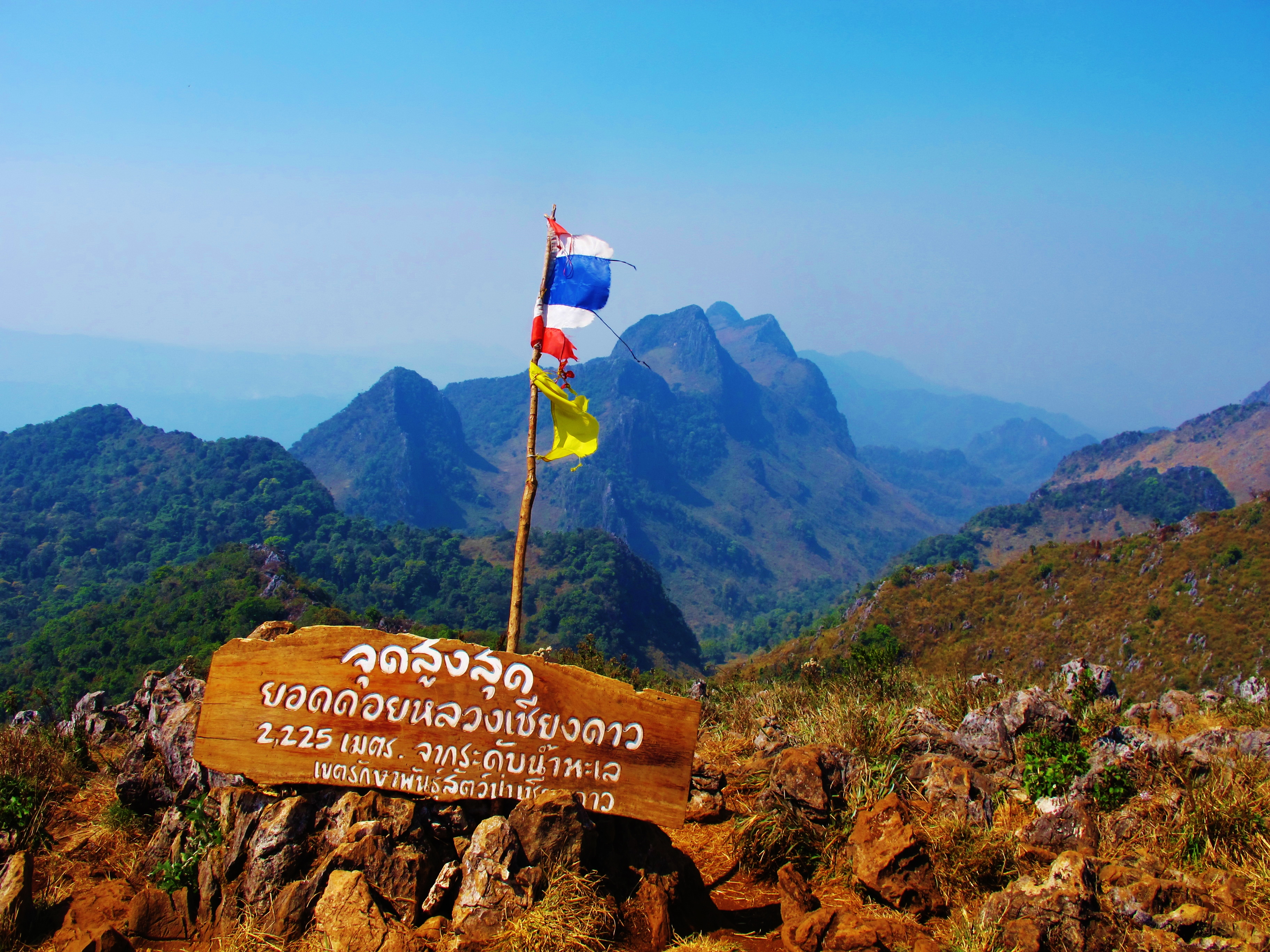
Doi Chiang Dao summit. It’s a scenic and bird-filled 8 hour roundtrip hike (including birding time) from the Pang Wua trailhead, well worth the effort.
An extremely pleasant (and not too strenuous) day hike, the ascent to the summit of Doi Chiang Dao must rank as one of the most enjoyable and scenic walks in northern Thailand. The route also offers the chance of some excellent birds, as it passes through a variety of habitats including limestone crags, pockets of broadleaved evergreen forest, and open grassland.
On the drive up to the trailhead, while it was still dark, I had to swerve to avoid an Asian Barred Owlet in the road. The first section of the walk itself is a steep hour-long ascent to a ridge – the trail is a little tricky in places so I was mainly watching my feet instead of the birds, but nonetheless spotted a Burmese Shrike on a treetop.
The second stage of the hike passes through the bowl of the mountains, and is comparatively level, with areas of bamboo, grassland, mature broadleaved forest, and several old banana plantations. Investigating scraping sounds coming from the forest floor produced excellent views of a Rusty-naped Pitta, a small group of Bar-backed Partridge seen briefly, an Asian Stubtail, several Silver-eared Laughingthrush in the forest pockets, and a small flock of Crested Bunting in a grassy clearing.
At the intersection with the trail to DYK substation, a Siberian Rubythroat hopped along the trail, and both Rusty-cheeked and White-browed Scimitar-Babblers were seen.
Higher up, the terrain becomes more open, and higher-altitude birds such as Brown-breasted Bulbul, Crested Finchbill, Mrs Gould’s Sunbird and Dark-backed Sibia began to make an appearance. Finally, at the campsite just short of the summit, I flushed a pair of Mountain Bamboo-Partridge – the first time I have seen this species anywhere on Chiang Dao mountain.
Other interesting records from this visit:
Rusty-naped Pitta – yet another bird seen, at dusk beside the temple steps – making a grand total of 4 for this Thailand trip.
Dark-sided Thrush – one in damp gully below monk’s restaurant at the temple.
Silver Pheasant – male at start of summit trail.
Long-tailed Broadbill – one at start of summit trail.
Large Woodshrike – two at start of summit trail.
Rufous-winged Buzzard – one in dry area a couple of kilometers past summit trailhead.
The perfect vehicle for getting from Huay Tung Tao to the Doi Pui campground – the difficult way (10km of steep dirt tracks and woodland paths).
After a successful early morning at Huay Tung Tao lake, I decided to head to the Doi Pui national park. In most vehicles, this would involve a journey of about 35km on sealed roads. However, for those in the know and with suitable wheels, it is possible to get there on dirt tracks and woodland roads – it’s about 10km straight up the mountain, with some seriously steep sections and a lot of loose sand and rocks to contend with.
On arrival at the campground, I decided to hike to the summit – I had never actually been to the top of the 1,685m-high Doi Pui, and I reckoned there should be some birds to see along the way. It’s about a 4km round trip hike to the summit from the campground, the narrow trail passing through some excellent montane broadleaved forest, with some pines and slightly more open forest near the top.
As is often the case with birding, I didn’t see either of my “targets” – the rather tricky Green Cochoa and Long-tailed Broadbill, both of which I have seen before in the park. I did however make some excellent observations. Early in the walk, patience and persistence finally resulted in good views of an Eyebrowed Wren-Babbler foraging in the leaf litter, and a small flock of Eyebrowed Thrushes was also good to see. At the top, literally directly above the summit sign, a male Vivid Niltava was unusual in that it was a South-East Asia tick for me, but not a year tick (it’s a common montane bird in Taiwan but it’s the first time I’ve seen it in Thailand, where it’s a scarce winter visitor).
Heading down the mountain via a slightly different route, I had brief views of a pair of Silver Pheasants on the trail ahead of me. The male is stunning, almost pure white on the back and tail. Forest pheasants in Thailand are generally scarce and very shy, so this was a real star bird to see. A Scaly Thrush flushed from the trail and later seen perched on a low branch was another bird I never tire of seeing.
Finally, nearing the bottom of the trail, I not only saw a pair of Clicking Shrike-Babblers (year tick and only the second or third time I have seen this species), but I also found their nest – a really nice way to round off a very productive and enjoyable morning.
South-East Asia Tick: Vivid Niltava (total 650). 2015 Year Ticks:Eyebrowed Wren-Babbler, Silver Pheasant, Clicking Shrike-Babbler (total 416).
Most visiting birders in northern Thailand concentrate on mountainous areas – and with good reason, for the mountains are where most of the special birds of the region can be found.
However, after focusing your energies on finding birds at high altitudes, you can often find that some relatively common lowland birds are missing from your list. The lake of Huay Tung Tao, just a few kilometers north of Chiang Mai city, is a good place to catch up with some familiar lowland birds, as well as offering the chance of a few specialities of its own.
Shortly after dawn is an excellent time to visit this site – the day trippers haven’t arrived yet, and the air around the lake is cool and peaceful. One of the first birds I saw was a mid-sized Acrocephalus warbler in some bushes near the lake. After quickly eliminating the common Thick-billed Warbler and Oriental Reed Warbler, I was left with a choice of various extremely similar species to ascribe it to. In all likelihood it was a Blunt-winged Warbler, a regular winterer in Thailand and the most likely candidate.
Mystery warbler aside, the best birds this morning were: a Rufous Treepie (one of Huay Tung Tao’s specialities), a Lesser Coucal preening in full view in the morning sun, a Thick-billed Warbler, and a small flock of Red Avadavats including a male moulting into breeding plumage.
2015 Year Ticks: Grey-breasted Prinia, Rufous Treepie, Lesser Coucal, Red Avadavat (total 413).
The ever-beautiful Vachirathan Waterfall at Km 20.5 on Doi Inthanon – even in the dry season it probably qualifies as one of the more impressive waterfalls in Thailand.
Nine years after my first visit to Doi Inthanon, this flagship site for birding in Thailand still has the power to deliver a lifer or three. It’s an impressive national park, notable for not only containing Thailand’s highest mountain (altitude 2,565m), but also providing some extremely varied and interesting birding across a number of altitudes and habitat types.
I spent an afternoon, a full day, and a final morning here, varying my birding locations in order to maximise my chances of seeing as many year ticks as possible.
Base camp of operations was – as usual – Mr Daeng’s excellent B+B, a few hundred yards along from the Doi Inthanon visitor center at approximately Km 31. Mr Daeng’s place goes from strength to strength, with the food getting better with every visit – and the rooms still priced at a very reasonable 500 baht per night.
I saw about 80 species on the mountain, a slightly lower total than previous visits, but this one was by far my best in terms of quality.
A short breakdown of the bird areas I visited this time:
Km 13: a dry and very hot area of deciduous forest, often seeming quite birdless but several key species are here.
Km 20.5: Vachirathan Waterfall, the largest falls in the park and worth a look for redstarts and forktails.
Km 24: Sirithan Waterfall, much less visited than Vachirathan and another spot worth trying for river species.
Km 30: Siriphun Waterfall, campsite, and the hills beyond – a side road through the village of Khun Klang leads to several good birding areas.
Km 34.5: excellent trail through broadleaved evergreen forest and bamboo.
Km 37.5: pristine evergreen forest, tough birding but some good species are in here. Also a roadside stakeout for several retiring species attracted to photographer’s bait.
Km 45-47: roadside good for warblers, sunbirds etc.
Km 47: the summit and Ang Ka nature trail/boardwalk, a unique (in Thailand) Himalayan sphagnum bog, good for many of Doi Inthanon’s special birds.
A thick carpet of fallen leaves at the deciduous forest at Km 13. This site gets very hot from about 9.00am onwards and is best visited in the very early morning.
Highlights:
Grey Nightjar – one over the road at dawn at approximately Km 44.
Black-tailed Crake – heard on successive evenings at the campsite marsh but not seen (therefore not included on my list).
Grey-sided Thrush – excellent views of a male at the summit marsh.
Dark-sided Thrush – at least four birds at the summit marsh early morning.
Rufous-throated Partridge – just one at the summit marsh.
White-browed Shortwing – three males seen at the summit marsh, plus a female at the roadside at Km 37.5.
Lesser Shortwing – female behind Mr Daeng’s.
Hume’s Treecreeper – pair at Km 34.5.
Banded Bay Cuckoo – a pair showing very well in a bare tree at Siriphun Waterfall, the male in full song.
Black-headed Woodpecker – at least 5 at Km 13
Blossom-headed Parakeet – one at Km 13
Rosy Minivet – pair at Sirithan Waterfall.
White-capped Water Redstart – one at Siriphun Waterfall, a real stunner.
White-headed Bulbul – several along roadside, on Khun Wang road 6.5km from the intersection.
Blue-throated Blue Flycatcher – a real surprise was a pair showing extremely well along the steps to the Sirithan Waterfall, the male in full song.
Snowy-browed Flycatcher – three males along roadside between Km 46 and Km 47.
Small Niltava – female by the roadside at Km 37.5.
Large Niltava – several at Km 34.5
Pygmy Wren-Babbler – pair at the summit marsh.
Slaty-bellied Tesia – abundant along the Km 37.5 trail but hard to see, one eventually showed fairly well.
Ashy-throated Warbler – common at the summit, isolated population on Doi Inthanon is the only one in Thailand.
Blyth’s Leaf Warbler – several at the summit marsh, to my knowledge the only place in Thailand where this subtle species can be seen.
Two-barred Warbler – one at Km 34.5.
Siberian Blue Robin – male behind Mr Daeng’s.
Ashy Woodpigeon – at least four between Km 45 and Km 47.
Wedge-tailed Green Pigeon – one at Sirithan Waterfall, and one at Km 34.5 trail on successive afternoons.
Common Rosefinch – five at the summit marsh.
Lifers: Grey-sided Thrush, Hume’s Treecreeper, Banded Bay Cuckoo (total 1,808).
2015 Year List Total: 409
Blue Whistling Thrush at Doi Inthanon summit. This individual is of the yellow-billed race, a common winter visitor to the area – the dark-billed resident race is less often seen but is also present here.
White-gorgeted Flycatcher, Doi Lang, February 19th – one of seven flycatcher species seen at the site.
It’s only been accessible to the general public for a few years, but in that time Doi Lang has achieved the status among birders of being possibly northern Thailand’s premier birding location. Literally straddling the Myanmar border, about as far north and west as you can go, in winter this mountainous area holds several Himalayan species that are seldom or never found elsewhere in Thailand.
It’s a fascinating place, for several reasons. First of all, it’s a true frontier zone, lying in a sensitive area with a disputed border. Chances are, at some points along the road, you are technically in Myanmar. The Thai army strictly controls the road, and at the time of writing it isn’t possible to complete the loop from Fang to Tha Ton because a 5km-long stretch of the road is completely out of bounds.
Second, the birding is fantastic, especially early morning and late afternoon. The open pine/oak forest on the western approach road contains all the birds one would expect in such habitat, for example Mrs Hume’s Pheasant, Giant Nuthatch and Grey-headed Parrotbill, with the added bonus of abundant wintering flycatchers and extremely sought-after species such as Himalayan Cutia.
I spent an afternoon and a morning along the western approach road, totalling about 7 hours birding, with the following highlights:
Hodgson’s Frogmouth – one roosting in a tree close to the road.
Himalayan Cutia – three.
Ultramarine Flycatcher – one male.
Sapphire Flycatcher – at least one male.
Slaty-backed Flycatcher – one male.
White-gorgeted Flycatcher – one.
Rufous-gorgeted Flycatcher – one.
Large Niltava – one female.
Mrs Hume’s Pheasant – one male on road.
Mountain Bamboo-Partridge – two on road.
Giant Nuthatch – one seen plus others heard.
Grey-headed Parrotbill – two flocks.
Himalayan Bluetail – two.
Siberian Rubythroat – two showed well.
Rufous-backed Sibia – several parties.
Dark-backed Sibia – common.
Rusty-cheeked Scimitar-Babbler – common.
Chestnut-bellied Rock Thrush – two.
Large Cuckooshrike – two.
Black-winged Cuckooshrike – one.
Indochinese Cuckooshrike – four.
Cinereous Tit – two.
Short-billed Minivet – common.
Slender-billed Oriole – several.
Golden Babbler – one.
Common Rosefinch – one male.
Lemon-rumped Warbler – one seen well and heard calling.
Bianchi’s Warbler – several seen well and heard calling.
Asian Stubtail – one.
Several of the birds – for example, Ultramarine Flycatcher, Hodgson’s Frogmouth, and one of the Siberian Rubythroats – were well staked-out by photographers. The latter bird was coming to mealworms right out in the open, most uncharacteristically for such a skulking species.
For me, it was hard to beat the spectacular Himalayan Cutia. This is not only a great-looking bird, but not often seen even here. Several overweight middle-aged bird photographers broke into a run when news reached them of what we were looking at. The icing on the cake was that it was a lifer for me – the Cutias I saw in Vietnam in 2006 have now been classified as a separate species, Vietnamese Cutia.
It would be hard to top such a wonderful morning, and so it proved. After lunch in Tha Ton, I attempted to ascend Doi Lang by way of the infrequently-used eastern road. Rainfall here is higher so the habitat differs markedly, and potentially offers some different and highly desirable species. North Thailand Birding gives excellent directions on how to find the road, which runs along the Myanmar border. The army controls the road, and you must fill in a form at the entrance and supply ID – and the road is technically out of bounds between 5pm and 7am.
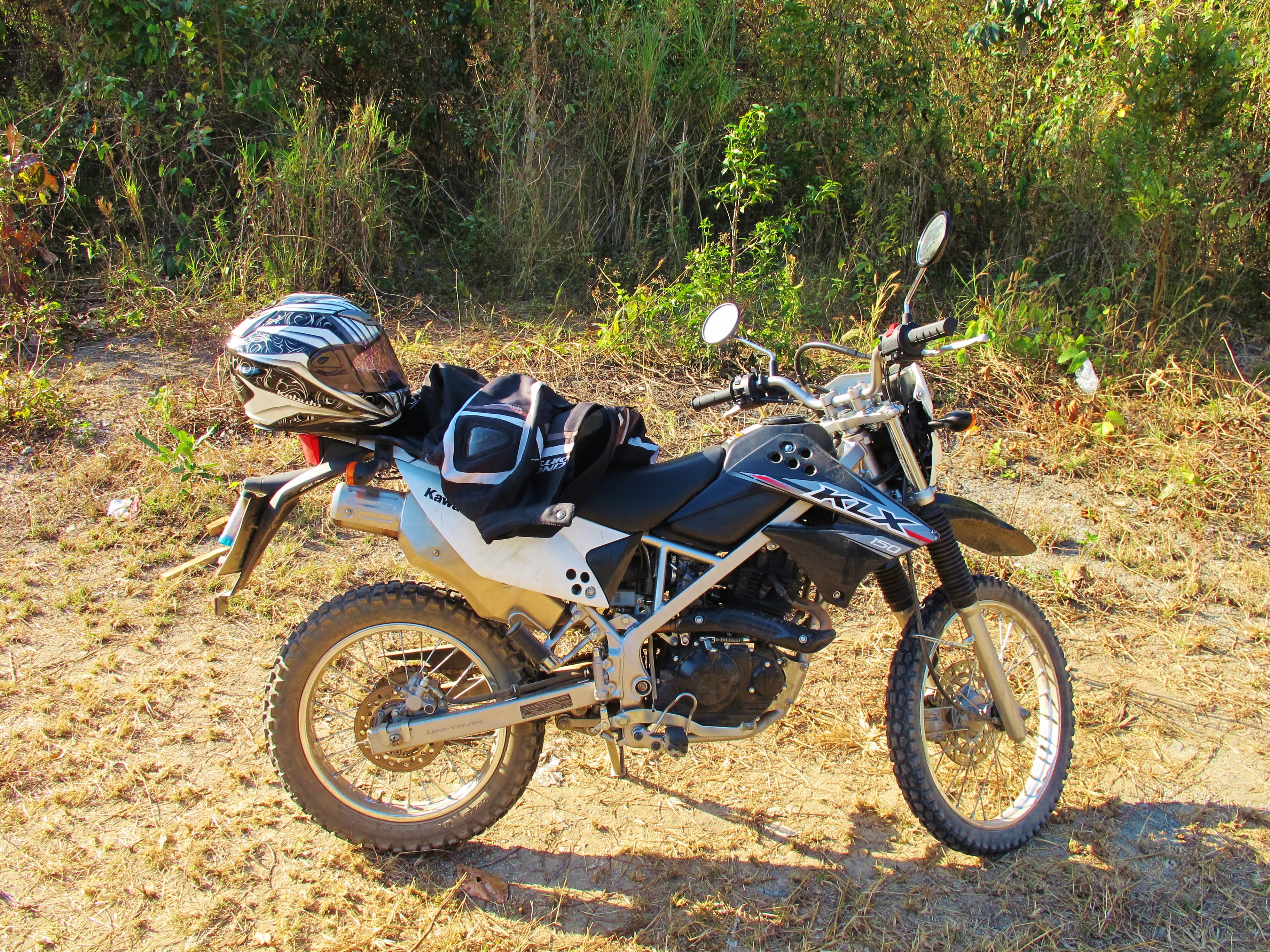
The eastern road is in truly terrible condition, and due to deep potholes and steep gravelly ascents would be impossible to navigate in a saloon car. It pushed my Honda maxi-scooter (and its rider) to the limit. I made it only as far as the concrete bridge before giving up. I saw few birds, but did make an interesting stop on the way back, where I walked a narrow path for several hundred meters into Myanmar. It would have been possible to continue to a hill tribe village, which was flying an unfamilar flag (the Shan state flag?), but I thought I had better not given the sensitive nature of this border area. I saw an Aberrant Bush-Warbler along here – nice to get the Myanmar list underway with such a quality species.
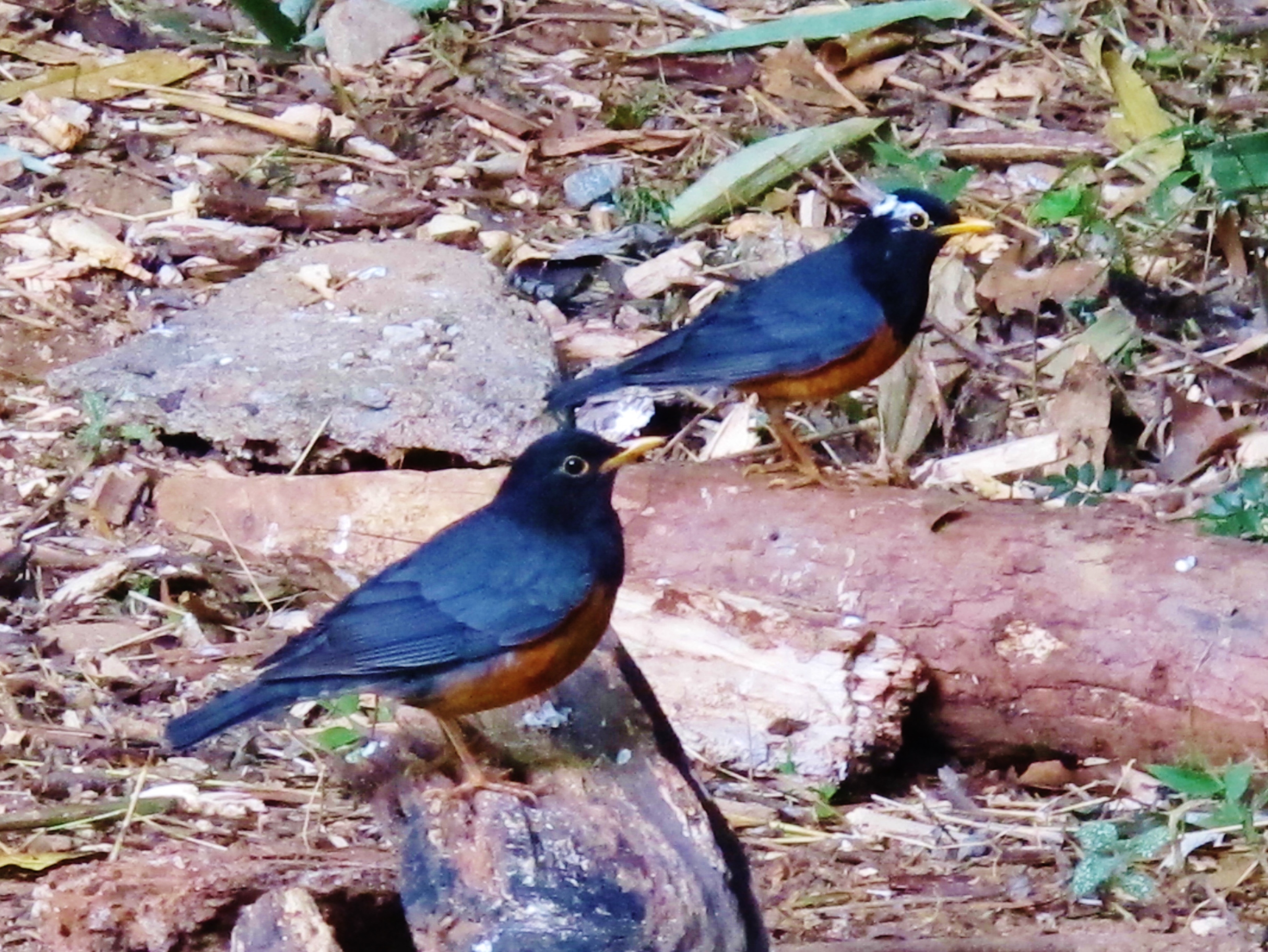
Two male Black-breasted Thrushes, Doi Angkhang Royal Project, February 19th (one bird is partially albinistic).
Having added very little in the way of new birds at Chiang Dao, the stars aligned for me in just the right way during an excellent 90 minutes at the Doi Angkhang Royal Project early this morning.
I had heard of a spot where a Rusty-naped Pitta was coming to mealworms provided by photographers. I didn’t need the pitta, but decided to check the spot out anyway, just in case any thrushes were also hanging around. It’s not been a good winter for thrushes in northern Thailand, but I figured I had at least a sporting chance of the semi-regular Black-breasted Thrush.
The Royal Project is an odd place, where hordes of Thai and Chinese tourists descend in mid-winter to experience the cold temperatures, see the fruit-growing orchards and gardens, and buy locally grown agricultural produce. It can be really busy (and noisy) here in December and January, but fortunately things have tailed off a little by mid February. I paid my 50 baht entry fee at the gate and – following the directions of some American birders at my hotel – I quickly found the photographers blind behind the bamboo garden. The only birds in evidence at this very early hour were two male White-tailed Robins and a skulking Eyebrowed Thrush. I decided to wander around a bit and come back later.
The trees around the restaurant have traditionally been the best area for scarce wintering birds, and on arrival in the area I was quickly treated to a succession of year ticks: Chestnut-vented Nuthatch, Silver-eared Mesia, Dark-backed Sibia and Hill Prinia. Best of all, though, were four Spot-winged Grosbeaks high in a tall tree, and close by, a lifer in the form of two Black-headed Greenfinches – these two species are very scarce and hard-to-find in Thailand.
At around 8.00am, I returned to the blind to see if anything was happening. It was. As soon as I got there, I was treated to another lifer – two male Black-breasted Thrushes hopping around in plain view on the ground. Over the next twenty minutes – and with the help of some mealworms provided by a Thai photographer – the handful of assembled birders were treated to a roll call of colorful birds at a range of just a few feet, including Siberian Blue Robin, Rufous-bellied Niltava, Hill Blue Flycatcher and Blue Whistling Thrush. A short while later, a movement on the forest floor revealed itself to be the star of the show, a handsome Rusty-naped Pitta. I had excellent views from my standing position, but the seated birders were unable to see it. Their accompanying guide promised the pitta would soon appear in front of the hide, but it never did, preferring to remain skulking at the back – in full view for me but no one else. I quietly left the hide – hopefully the other birders managed to see it in the end.
My final stop for the morning was the trail system at Km 21, where I had spent yesterday afternoon. I added a few new birds to the year list here, namely Yellow-cheeked Tit, Davison’s Leaf Warbler, Radde’s Warbler (both warbler species were heard but not seen yesterday), Long-tailed Minivet, and Rufous-backed Sibia.
1,928 meter high Doi Angkhang may have fallen from grace among birders in the last few years due to the increasing accessibility and popularity of nearby Doi Lang, but it remains one of my favorite birding spots in Thailand.
The area feels remote, lying on a dead-end road next to the Burmese border. It can get seriously cold here in winter – lows in January/February frequently drop to 3C (37F). Birding can be tough, with many of the specialities both scarce and elusive. I remember clearly my first visit in May 2006, when it took me nearly three days to find Scarlet-faced Liocichla – luckily this beautiful species is somewhat easier to find in winter.
My day started before dawn at Chiang Dao, where I heard four species of owls (Mountain Scops Owl, Collared Scops Owl, Brown Hawk Owl, and Asian Barred Owlet), but saw none of them. However, two splendid male Siberian Blue Robins near one of the temple buildings made up the lack of owls.
After breakfast, I drove the 90km “back way” to Doi Angkhang, via Arunothai and the Burmese border. The road is in fairly bad shape these days, but still it’s an enjoyable drive, with the mountains of Burma forming an unforgettable backdrop. As one nears Doi Angkhang, the Chinese Cemetery is an essential stop, as it’s a reliable site for one of the local specialities – Brown-breasted Bulbul. I scored with several of them, despite it being late morning and there being little else around.
After checking in at the Angkhang Nature Resort (my splurge after three nights in bare-bones accommodation at Malee’s in Chiang Dao), I headed uphill once again to the trails near Km 21. I love birding this area, as it brings back many fond memories from visits past. As soon as I entered the forest today, nearly the first birds to greet me were several inquisitive Scarlet-faced Liocichlas. They were in nearly the same spot when I finally connected with them for the first time in 2006, when I sank to my knees with joy after nearly 25 hours in the field looking for them.
The summit of Doi Angkhang has one of the finest views I’ve ever seen, and it’s a proper mountain summit, a pointed peak at the top of a ridge surrounded by big drops on all sides. It’s well worth the heart-busting 20 minute near-vertical climb to get there.
Year ticks added in the summit trail area this afternoon: Scarlet-faced Liocichla, Silver-eared Laughingthrush, Lesser Racket-tailed Drongo, Mountain Bulbul, Black-throated Sunbird, Mrs Gould’s Sunbird, Claudia’s Leaf Warbler, Chestnut-crowned Warbler, Mountain Tailorbird, Rufous-bellied Niltava, Little Pied Flycatcher, Spectacled Barwing, Golden-throated Barbet and Pygmy Wren-Babbler (total 346).
Today started in auspicious fashion, with a lifer safely under the belt before it even got light. I took a walk up to the forest temple while it was still dark, accompanied by the calls of Mountain Scops Owl, Collared Scops Owl and Asian Barred Owlet. Following up on a Collared Scops Owl calling close to the temple car park, I was surprised when I actually managed to locate it in my spotlight. This is a bird I’ve heard on many occasions, but now it can finally go onto the life list.
The day was spent in the Chiang Dao temple area, and later in the afternoon around the town and rice paddies in the valley. Apart from the Collared Scops Owl, my early morning haul around the temple comprised Oriental Pied Hornbill, Bay Woodpecker, Pin-tailed Green Pigeon, and – finally – views of both Great Barbet and Blue-throated Barbet. The latter two species can be heard almost constantly in the area, but seeing them can be tricky as they are invariably perched in the canopy of very tall trees.
Late morning, I headed to a temple near the Chiang Dao cave, where a patch of bamboo forest was formerly a stakeout for a Blue Pitta. This is also the only place I have even seen Violet Cuckoo, on a previous visit. No pittas or cuckoos showed today, but several Black-hooded Orioles were nice birds to see. Near the entrance gate, lots of warblers in the grass and scrub included single Thick-billed Warbler andtwo Greenish Warblers, with two Dusky Warblers in low vegetation nearby.
After lunch, I checked out the area near the Muang Khong road checkpoint – and added a nice Asian Fairy Bluebird, a Purple Sunbird, and several Grey-eyed Bulbuls in a flowering tree.
Finally, I spent the last few hours of the day in the rice paddies near Chiang Dao town. This is a staple location for birders searching for Grey-headed Lapwing and Wire-tailed Swallow, both of which I saw without difficulty. The fields themselves were fairly quiet, with Pied Bushchat new for the year list, and some other common birds including three pipit species (Richards, Oriental and Red-throated), and Siberian Stonechat.
My favorite site in the area is a section of the Ping river just to the south of the rice paddies – at times, this can be a good place to watch starlings and mynas coming to roost in the reeds. Top birds here today comprised a Ruddy-breasted Crake in constant view on a muddy backwater of the river, two Green Sandpipers, two White-breasted Waterhens, a fine Long-tailed Shrike (these look completely different here compared to Taiwan and are a potential split), and best of all a Wryneck in low scrub near the river.








 Dom the Birder